
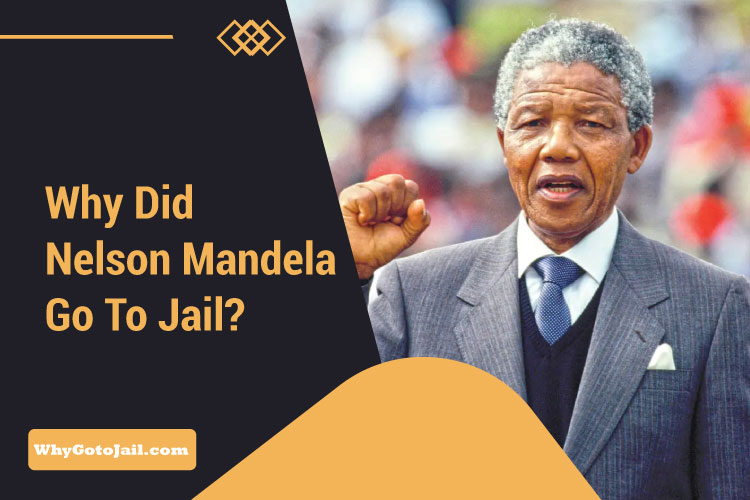
Nelson Mandela is known around the world as a symbol of peace, justice, and human rights. But before he became South Africa’s first Black president and won the Nobel Peace Prize, Mandela spent 27 years in prison. Why did Nelson Mandela go to jail? The answer lies in South Africa’s painful history of apartheid—a system of racial segregation and oppression that ruled the country for decades.
This article will explore what Mandela stood for, what led to his arrest, the charges he faced, and how his time in prison became a turning point for South Africa.
Understanding The System Mandela Fought Against
To understand why Nelson Mandela was jailed, you must first understand apartheid. This was a legal system in South Africa that started in 1948 and separated people by race. The white minority controlled the government, economy, and land, while the Black majority had limited rights. They could not vote, live in certain areas, or attend the same schools as white people.
Mandela believed this system was unfair and had to end. He wanted equal rights for all South Africans—Black, white, and everyone else.
Mandela’s Early Political Life
Mandela began his journey as a peaceful protester. He joined the African National Congress (ANC) in the 1940s and helped form its Youth League. In the beginning, he and his fellow activists used nonviolent methods like marches and petitions to oppose apartheid.
However, after the government violently crushed peaceful protests, including the 1960 Sharpeville Massacre, where police killed 69 unarmed Black protesters, Mandela changed his approach. He believed peaceful resistance alone was no longer enough.
Why Did Nelson Mandela Go to Jail?
Mandela co-founded Umkhonto we Sizwe (meaning “Spear of the Nation”) in 1961. It was the armed wing of the ANC. Their goal was to sabotage government buildings and infrastructure—not harm people—to pressure the apartheid regime into change. Mandela became a key figure in planning and organizing these activities.
In 1962, Mandela was arrested and convicted of leaving the country illegally and encouraging workers to strike. He was sentenced to five years in prison.
But while serving that sentence, new charges were brought against him. In 1963, police raided a secret hideout in Rivonia and found documents that linked Mandela and others to sabotage plans. This led to the famous Rivonia Trial.
The Rivonia Trial and Mandela’s Life Sentence
At the Rivonia Trial in 1964, Mandela and several of his comrades were charged with:
- Sabotage
- Conspiracy to violently overthrow the government
- Organizing guerrilla warfare
Mandela admitted to the sabotage but denied that he or the ANC wanted to start a civil war. He explained that he had no choice because the government refused to listen to peaceful voices.
In one of the most powerful speeches in modern history, Mandela told the court:
“I have cherished the ideal of a democratic and free society in which all persons live together in harmony and with equal opportunities. It is an ideal for which I am prepared to die.”
Despite international calls for his release, Mandela was sentenced to life in prison.
Life in Prison: 27 Years of Sacrifice
Mandela spent 18 of his 27 years in Robben Island Prison, off the coast of Cape Town. Conditions were extremely harsh. He was kept in a small cell with no bed and had to do hard labor in a limestone quarry.
Even in prison, Mandela stayed strong. He continued to inspire people, both inside and outside South Africa. His name became a symbol of the anti-apartheid struggle. Over time, the world began to demand his release. Protests, music, and political pressure helped bring attention to his cause.
Mandela’s Release and the End of Apartheid
After growing national and international pressure, South African President F.W. de Klerk released Mandela from prison on February 11, 1990.
His release marked the beginning of the end of apartheid. Mandela helped lead peaceful talks with the government. Nelson Mandela was elected as South Africa’s first Black president in 1994, just four years after the country’s first democratic elections.
Conclusion
The answer of Why Did Nelson Mandela Go to Jail? Is that Nelson Mandela went to jail because he stood up against an unjust system. He was charged with sabotage and conspiracy, but his true “crime” was fighting for equality. He gave up nearly three decades of his life so future generations could live in a fairer society.
His imprisonment was not the end of his fight—it was the turning point that helped bring global awareness to apartheid and eventually led to its downfall. Today, Mandela is remembered not just for going to jail but for what he did after he came out: leading a divided country toward peace, unity, and democracy.
FAQs
What did Nelson Mandela go to jail for?
He was jailed for sabotage and plotting against the apartheid government after trying to end racial segregation through armed resistance.
Was Mandela a terrorist?
While the apartheid government called him a terrorist, most of the world now sees him as a freedom fighter and a hero of human rights.
How long did Mandela stay in jail?
He was in prison for 27 years, from 1962 to 1990.What was Mandela’s biggest impact?
He helped end apartheid and became the first Black president of South Africa, proving that peace and reconciliation were possible even after deep injustice.