
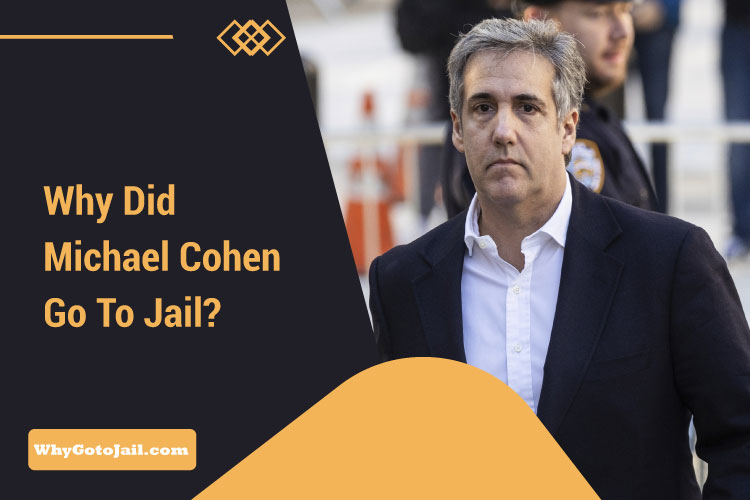
Once regarded as Donald Trump’s personal lawyer and fixer, Michael Cohen emerged as a key player in several significant court disputes. Since his case involved a former US president and garnered international attention, many individuals have questioned why he was imprisoned.
We’ll look at the specific offenses, the chronology, and why did Michael Cohen go to jail. Moreover, this blog provides all the information you need to comprehend Cohen’s legal demise fully.
What Did Michael Cohen Go to Jail For
Michael Cohen was found guilty of several offenses, each of which had severe legal repercussions. As a result, these crimes were not isolated; rather, they were a part of a larger pattern that also involved illegal political influence and personal financial fraud.
Here’s a breakdown of the key charges:
| Crime | Details |
| Tax Evasion | Failed to report over $4 million in income, including taxi medallion profits. |
| Campaign Finance Violations | Arranged hush-money payments during the 2016 election, violating legal limits. |
In addition, making Untrue Claims to Congress lied about the timing for the Trump Tower Moscow project. Even though Cohen had years of influence and access to political power, these convictions were part of a pattern of unethical activity that finally caught up with him.
Why Did Cohen Go to Jail
When the FBI raided Cohen’s home, office, and hotel room in early 2018, his downfall really got underway. Nevertheless, this extraordinary incident triggered a chain reaction. Federal investigators discovered large-scale financial irregularities, questionable transactions, and willful falsification of official statements.
Consequently, his most well-known campaign finance violation was paying hush money to model Karen McDougal and adult film star Stormy Daniels. These payments were made to prevent their alleged affairs with Trump from becoming public knowledge prior to the 2016 election. In violation of US election law, the funds were disguising their intended use.
In court, Cohen eventually acknowledged that he made these payments “in coordination with and at the direction of” a federal candidate, who is generally believed to be Donald Trump. Trump was not charged at the time, but this statement clearly linked him to illegal activity.
Furthermore, Cohen’s false statements to Congress regarding the chronology of Trump’s commercial activities in Russia weakened a significant federal probe. In January 2016, he claimed to Congress that negotiations on a possible Trump Tower project in Moscow were over, but in reality, they had continued long into June after Trump emerged as the Republican nominee.
Timeline of Key Events
Knowing the timeline makes it easier to understand how Cohen went from being a trusted insider to being found guilty of a felony. Here is a summary of significant turning points in his legal journey:
| Date | Event |
| April 2018 | FBI raids Cohen’s properties |
| August 2018 | Pleaded guilty to 8 criminal counts |
| December 2018 | Sentenced to 3 years in federal prison |
| May 2020 | Released to home confinement due to COVID-19 |
| November 2021 | Fully completes the sentence |
In addition to ending Cohen’s legal career, these incidents had a lasting negative impact on Trump’s presidency.
How the Public Perceived the Case
Cohen’s conviction sparked public discussion and extensive media coverage. While some saw him as a scapegoat for the greater issues involving Trump’s inner circle, others saw him as a crooked lawyer who had finally been brought to justice.
In his biography, Disloyal: A Biography, Cohen later became a vociferous opponent of Trump. The book detailed years of cover-ups, loyalty tests, and what he called “organized crime at the highest levels.” In contrast, it provided the public with more information on the inner workings of Trump’s political and business endeavors.
Cohen’s Life After Prison
Cohen entered a completely different stage of life after serving a portion of his time in jail and the remaining portion in home confinement. In fact, he started talking about political corruption in public, doing interviews, and starting a podcast.
For this reason, in addition to continuing to assist with current investigations into Donald Trump’s finances and campaign operations, he has also given numerous congressional testimonies. Although his transition from fixer to whistleblower has generated both praise and condemnation, it has unquestionably changed his public persona.
Final Thoughts
So, why did Michael Cohen go to jail? Lying under oath, political cover-ups, and personal greed are all part of the solution. To illustrate, he was found guilty of major offenses, including fraud, tax evasion, and campaign irregularities, which demonstrated how financial and political wrongdoing may coexist in influential circles.
To sum up, Cohen was previously a significant figure in Donald Trump’s universe, but his conviction served as a warning about loyalty, responsibility, and the cost of breaching the law.