
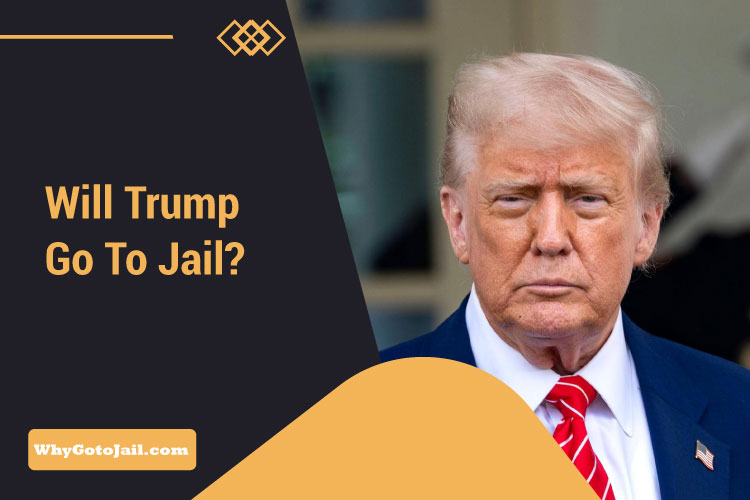
In 2025, it is one of the most asked questions in American politics: Will Trump go to jail? With Trump now returning to the White House for another period, the question has become more complicated than ever. While many people believe that their previous legal problems can put them behind bars, the truth is not so simple. So far, Trump has not gone to prison. But will it be in the future? Let’s find out the whole picture.
Trump’s Felony Conviction in New York
The biggest turn in Trump’s legal visit came in May 2024, when a New York jury sentenced him on 34 hooliganism charges. These claims were tied to the funds raised during the president’s campaign in 2016. The prosecutors claimed that Trump was trying to hide these payments by proving the trade records wrong to protect their image during the election.
Fixed faith created history. Trump became the first US president convicted of hooliganism, past or present, a hooliganism. Many people followed the prison. However, things did not go that way. In January 2025, a few days before Trump returned to the Oval Office, the judge chose not to send him to prison. Instead, Trump received an unconditional discharge, which means no jail, no fine, and no probation.
Why Didn’t Trump Go to Jail?
According to the judge, sitting with prison time or punishing the incoming president may interfere with the democratic process. The court also considered the fact that Trump again led a national campaign and won the election in 2024. Sending him to prison can lead to great political unrest and questions of justice. In short, the judge decided that while Trump broke the law, the prison was not appropriate under the circumstances.
This result harassed many legal experts and political opponents, who realized that Trump was receiving special treatment. But supporters claim that the decision helped protect the stability of the country.
Trump’s Return to the White House
On January 20, 2025, Donald Trump was once again sworn in as US president. This gave them a new layer of legal protection. The US president is not above the law, but it is extremely difficult to prosecute a sitting president under the current legal criteria and guidelines of the Ministry of Justice.
The concept gained more clarity in the middle of -2024 when the US Supreme Court decided in favor of the president’s security. In a historical case, the court said that the sitting presidents have complete immunity to official actions. To understand full legal implications, read the Supreme Court’s opinion on the president’s immunity.
Legal Immunity and Delayed Trials
Thanks to his position, Trump is now cast in most criminal cases while living in the position. Federal prosecutors usually avoid straining the president’s time. Even in cases, the judges often prevent case handling to avoid political conflicts.
This legal immunity has given Trump a respite. His lawyers have already used this security to postpone or dismiss cases that were active before returning to the presidency. Some judges are arguing that Trump’s actions during his time as president were “official duty” and therefore preserved. This process is slow and can take years to solve.
What About Other Criminal Cases?
Trump’s legal problems are not limited to New York. He is also involved in other studies that can give birth to prison time if the president’s immunity no longer protects him.
A big case includes Trump’s actions after the 2020 election. Federal prosecutors have accused him of overturning the election results and trying to start the capital of the capital on January 6. Another case in Georgia is around pressure efforts to change the counting of votes by state officials. There is also a federal case about classified documents that he allegedly placed in Mar-a-Lago.
So far, none of these cases have gone for testing when he has returned to the position. Most are either delayed or under review by high courts. Some legal experts believe that when Trump’s president’s presidency is over, these cases can continue and possibly lead to prison time.
Could Trump Go to Jail After His Presidency?
When Trump leaves the office, either on or before the end of his term of office, they will no longer have immunity. It opens the door for testing to resume. If he is convicted in one or more of these cases, the court can put him in jail. However, many factors can still make it difficult.
First, Trump will end up on any test in the 80s. The courts may assess their age and health while determining the punishment. Second, Trump has access to top lawyers and endless appeal options. These legal delays can prolong the matter for years, possibly into the 2030s. Third, public pressure and political reactions can affect how judges and prosecutors work.
Although it is legally possible that Trump can go to jail after leaving the position, many obstacles stand in the way.
What If Trump Loses Legal Immunity After 2028?
Since Donald Trump has already served two presidential terms, U.S. law under the 22nd Amendment bars him from running for a third time. This means he cannot legally run for president again in 2028. As a result, he will no longer benefit from any presidential protections or political power that may have helped delay or influence legal proceedings.
Without the shield of the presidency, Trump’s ongoing legal issues could escalate. Prosecutors would be freer to pursue cases against him, and any paused investigations or court trials could resume. If convicted, the chances of him facing jail time become more realistic—especially if a jury finds him guilty.
Though his legal team is adept at using delay tactics—such as appeals and procedural motions—these strategies can only go so far. Without future political office to protect him, the timeline for potential prison time might speed up, making accountability more likely in the post-presidency phase.
What Would Happen If a President Went to Jail?
No US president has ever gone to jail, so there is no clear roadmap for what will happen. If a sitting president is convicted, it will cause a constitutional crisis. Congress can start the persecution negotiations or delay the judgment until the courts end. If a former president is jailed, it will likely be an effective moment in American history and send a message that no person is above the law.
Nevertheless, the American criminal justice system is gradually changing, mainly in politically sensitive cases. Trump is one of the most effective figures in the United States of America, with hundreds of thousands of unswerving supporters and deep political effects.
Will Trump Ever Go to Jail?
In 2025, Trump is a guilty hooligan, a sitting president, and a legal puzzle. He has not gone to jail, and he probably won’t be in office. The justice system has not ended with him, but time, strength, and politics are in his favor for now.
So, will Trump go to jail? Not today, probably not tomorrow. But the question remains open. It all depends on how long his legal protection goes, how the courts handle their cases, and what the public demands in the future.
Conclusion
In mid-2025, Donald Trump is still an independent person, the first US president to be guilty of hooliganism. His return to the White House has stopped most legal action against the president due to immunity and political sensitivity to active prosecution. While the courts have not rejected future results, the way of dislocation is full of legal, constitutional, and procedural obstacles.
So, will Trump go to jail? Not during his presidency, but once he leaves office, the possibility may resurface depending on how pending cases unfold. Until then, the answer remains uncertain and deeply tied to how American law treats its most powerful citizens after they leave power.